🧪 Antioxidants in Food: High School Students Dive Into Biochemistry at Bishop’s University
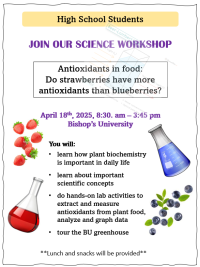
On April 18, 2025, a group of high school students from Stanstead took part in a hands-on science workshop hosted at Bishop’s University. The workshop, titled “Antioxidants in Food: Do Strawberries Have More Antioxidants than Blueberries?“, introduced students to the fascinating world of plant biochemistry and its impact on human health and nutrition.
Organized by Prof Sarathi Weraduwage, Associate Professor at Bishop’s University in collaboration with Tanya Rhodes, the high school program coordinator at Phelps Helps the workshop aimed to make science tangible and engaging for youth. Seyed Mehrzad Sajjadi Nezhad, a PhD student in Pierre Harvey’s lab at the Université de Sherbrooke and Anne-Marie Viens-Larin, a master’s student in the Weraduwage lab at Bishop’s University also assisted.
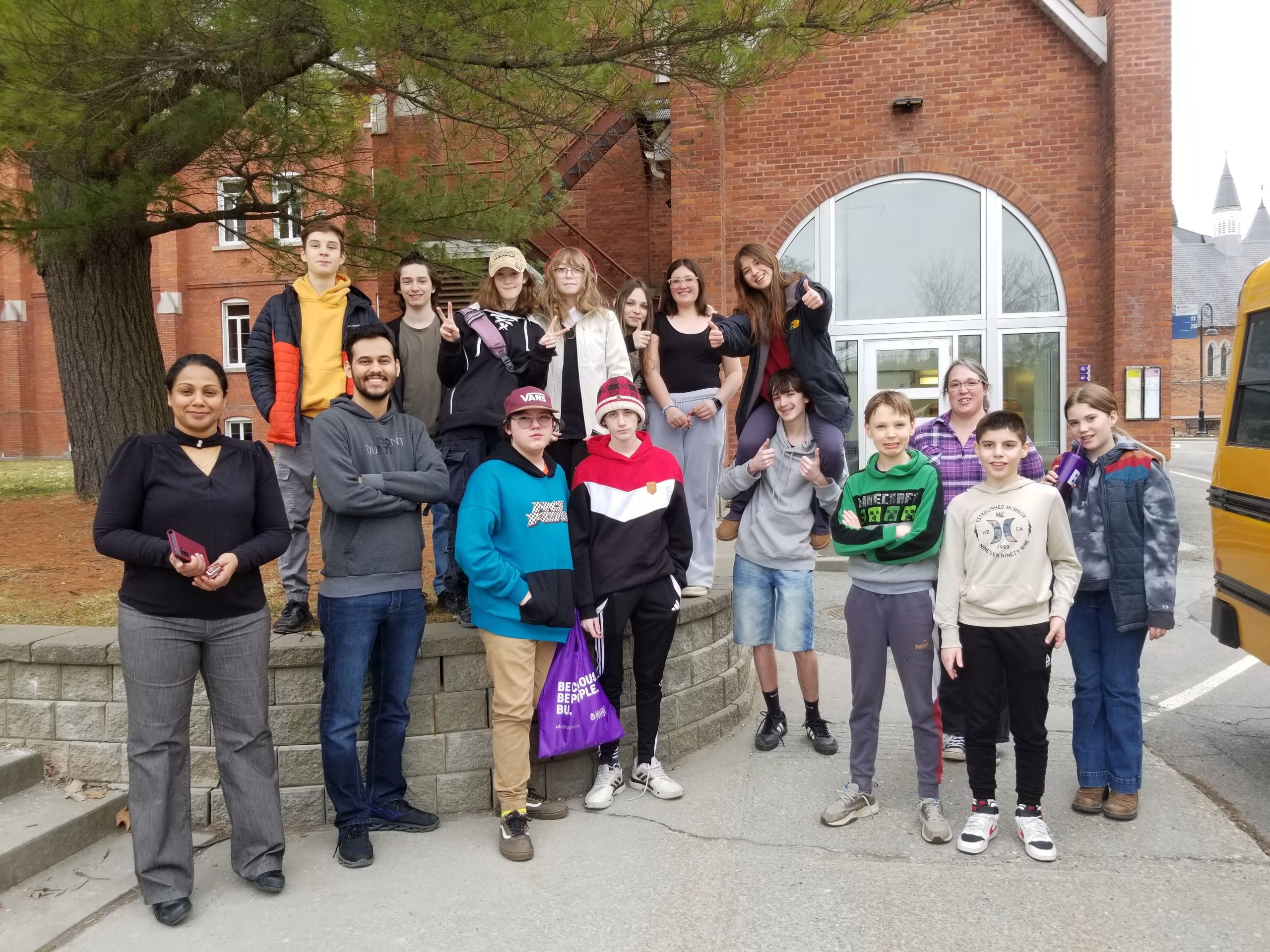
Pictured left: the student cohort, accompanied by Seyed, Prof. Weraduwage, and Anne-Marie.
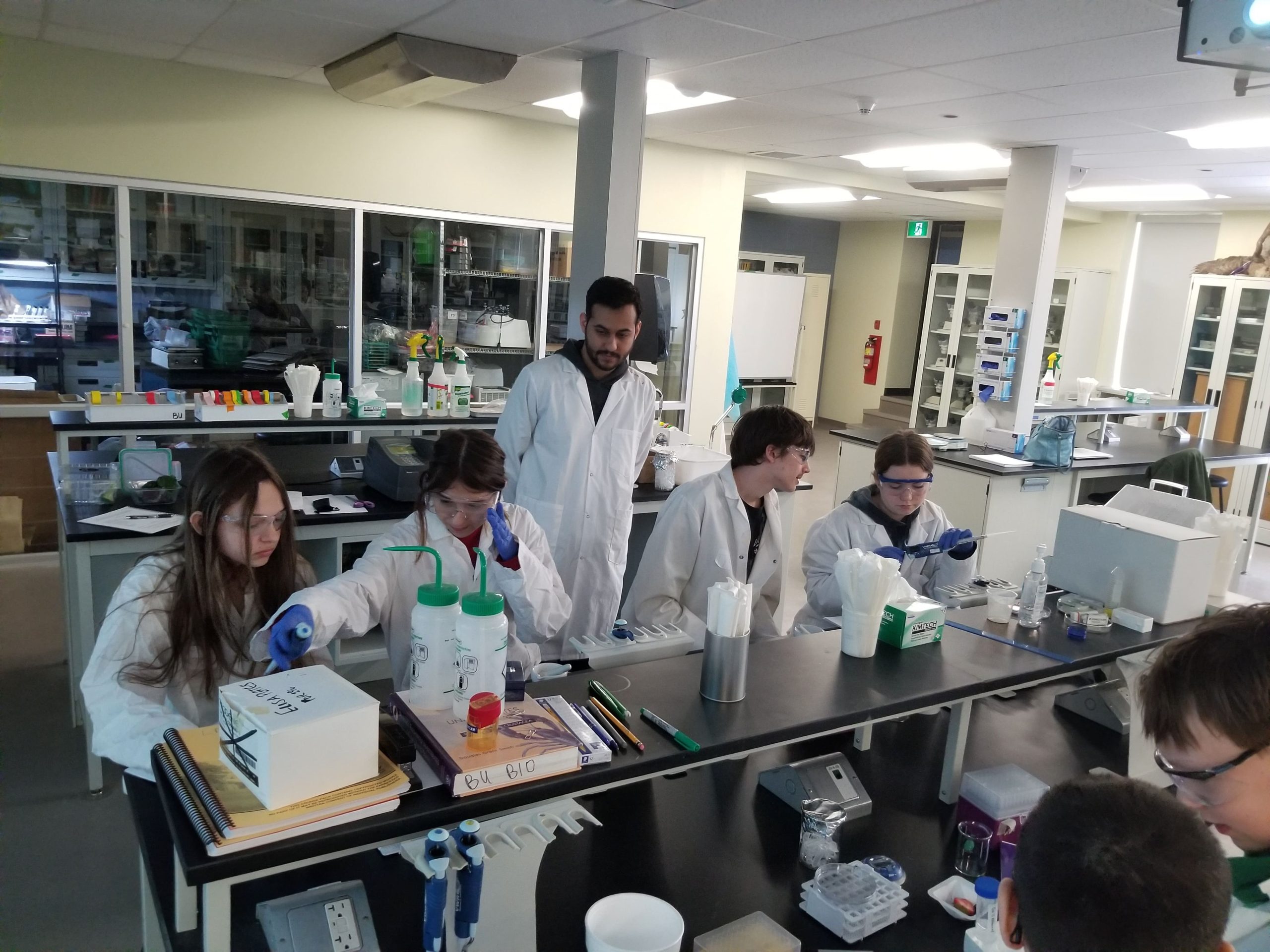
On the right: students hard at work under Seyed’s thoughtful guidance!
Throughout the day, students conducted real biochemical assays, analyzed data, engaged in informal conversations with researchers, and explored how biochemistry connects to everyday life. The students also had the opportunity to tour the greenhouse of Bishop’s University.
This initiative was funded by the Centre SÈVE’s General Public Grant, a program designed to foster connections between university researchers and the public, and to support clear, accessible science communication. The workshop covered most of the costs, including transportation, lab material, graduate student stipends and materials such as printed lab manuals, notebooks, and pens.
Beyond the experiments, the workshop had a deeper purpose. In Canada, fewer than 50% of students pursue STEM education beyond secondary school (Duodu et al., 2017). Lack of exposure to integrated, hands-on learning experiences, negative views about sciences, and the difficulty in seeing how STEM studies translate into real-world careers are key factors. In this context, this workshop was designed to spark curiosity and excitement about science, especially biochemistry, and to show students that a future in STEM is both possible and meaningful.
With continued support, workshops like this one can help bridge the gap between science and society and inspire more young minds to see themselves in STEM.
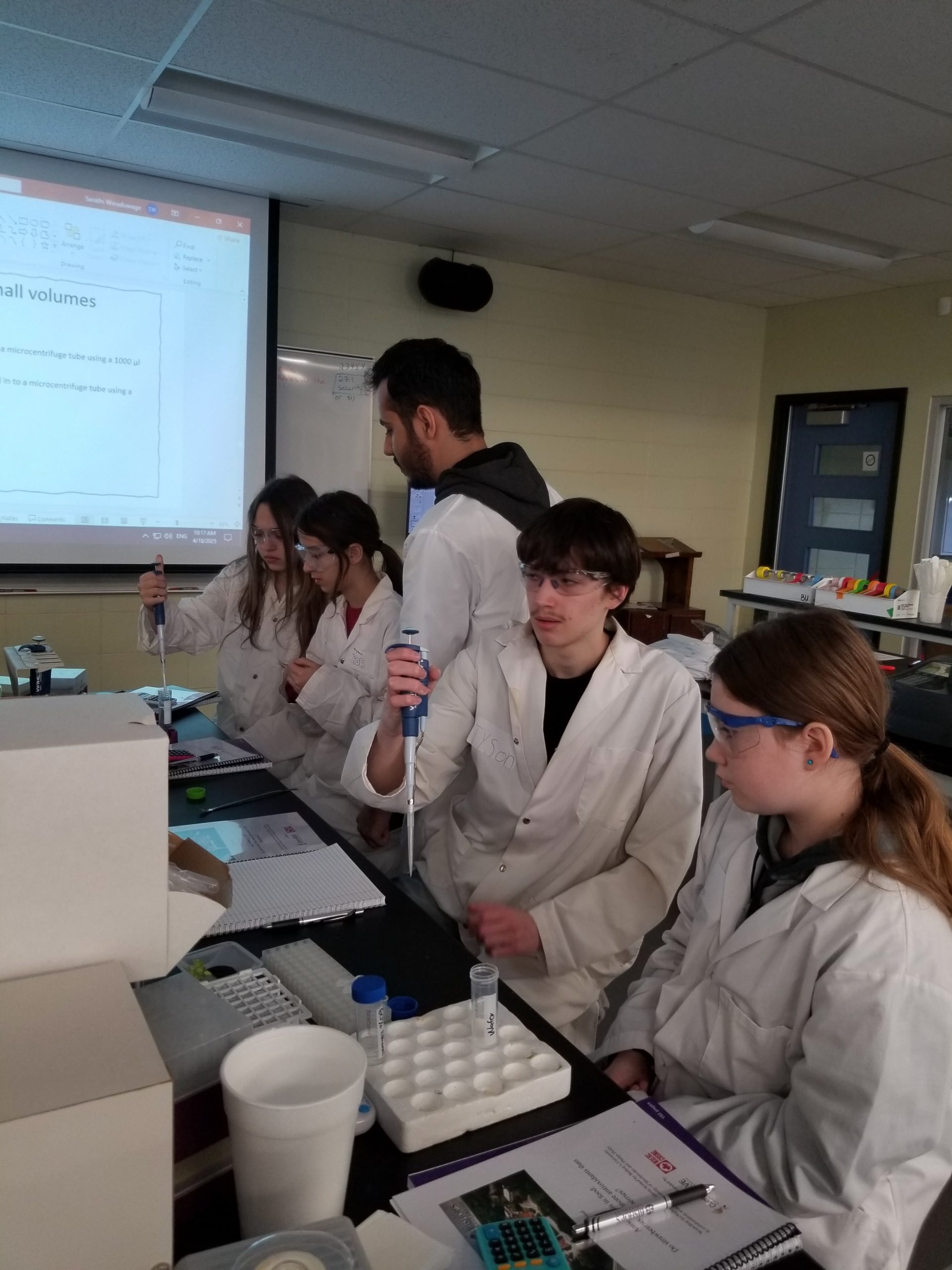
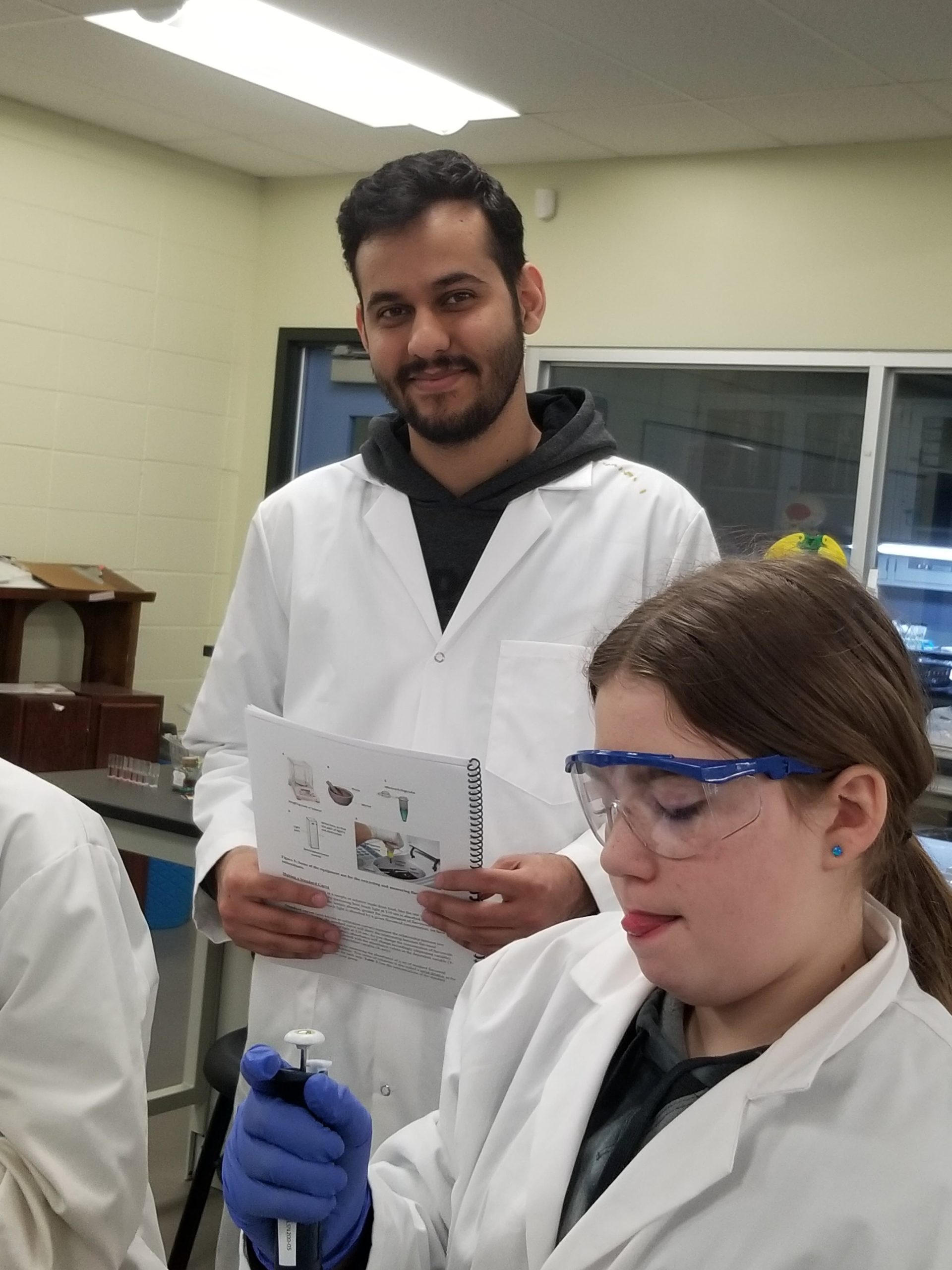
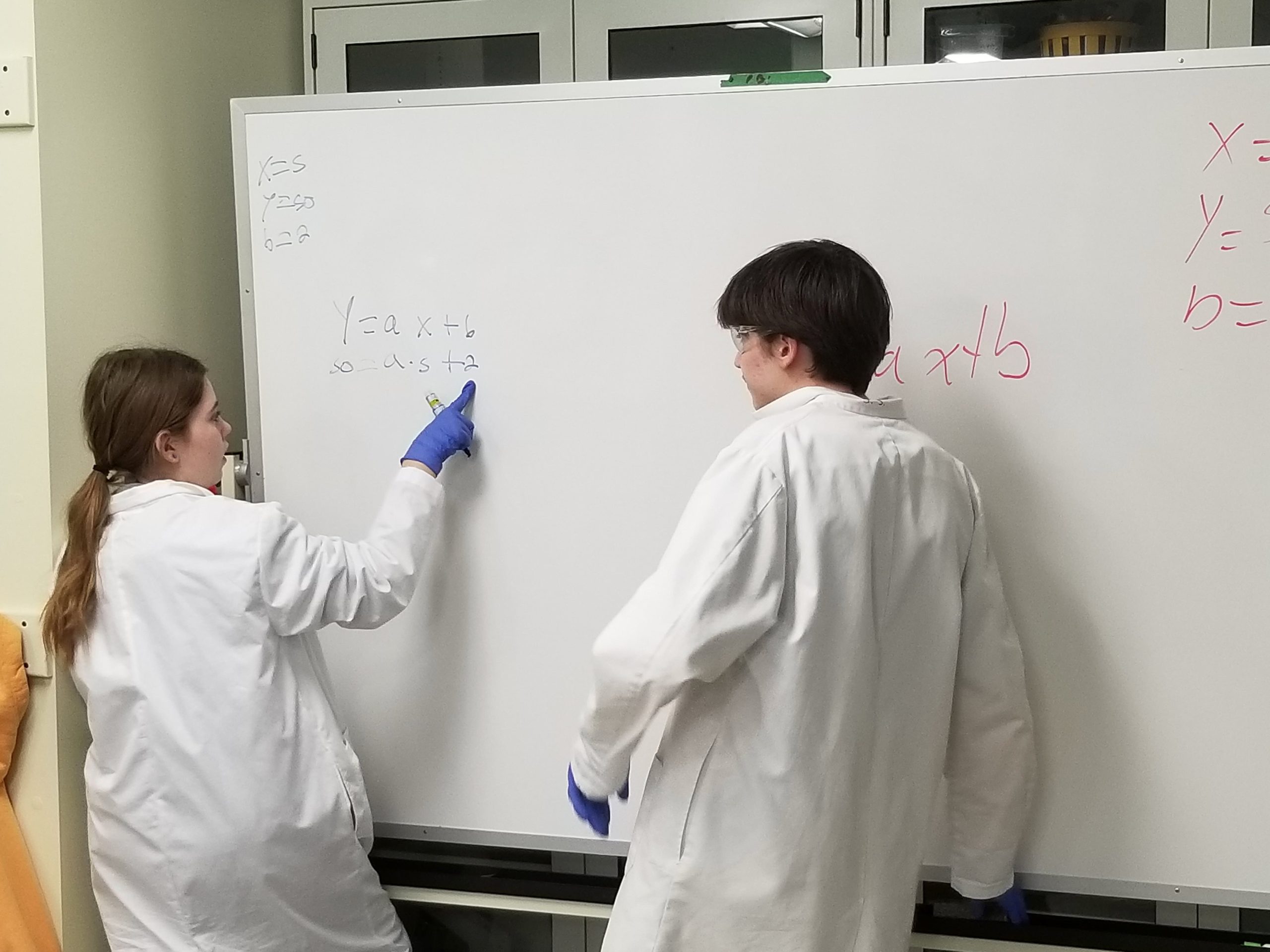
Science in action!
A glimpse of students immersed in hands-on learning.